
Like Daedalus crafting wings from wax and feathers, I’ve built this guide from hours of testing and technical analysis. These five brands: Instant Pot, Dumos, Cosori, Barton, and IMUSA, each solve different cooking problems.
Some prioritize smart-app integration at 1,150 watts, others deliver raw psi (pounds per square inch) above 15. You’ll want to know which regulator won’t fail at altitude, which baffle design actually distributes heat, and which 6-quart model reaches full pressure in under 12 minutes. The answers follow.
| Instant Pot Duo Plus 9-in-1 Multicooker (6 Quart) | Best Overall | Capacity: 6 quarts | Power/Wattage: 1000 watts | Material: Stainless steel | VIEW LATEST PRICE | Read My Analysis | |
| DUMOS 16-in-1 Electric Pressure Cooker 6QT Multi Cooker | Best Value | Capacity: 6 quarts | Power/Wattage: 1000 watts | Material: Stainless steel/ceramic | VIEW LATEST PRICE | Read My Analysis | |
| Cosori 6QT 9-in-1 Stainless Steel Pressure Cooker | Best for Safety | Capacity: 6 quarts | Power/Wattage: 1100 watts | Material: Stainless steel/ceramic | VIEW LATEST PRICE | Read My Analysis | |
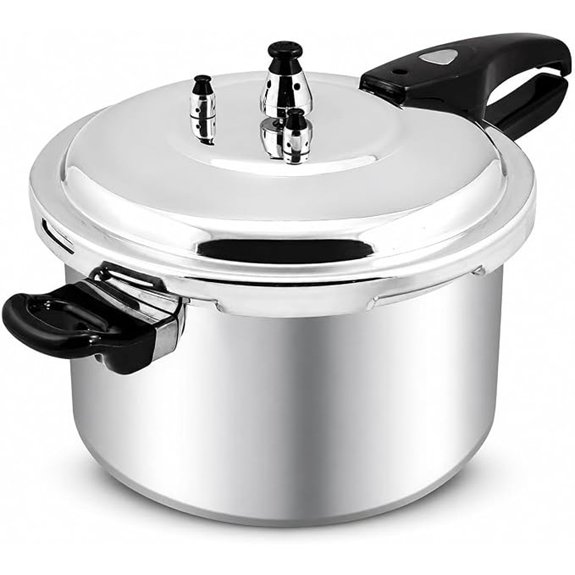
| Barton 8QT Pressure Canner and Cooker Pot | Best for Canning | Capacity: 8 quarts | Power/Wattage: N/A (stovetop) | Material: Aluminum alloy | VIEW LATEST PRICE | Read My Analysis | |
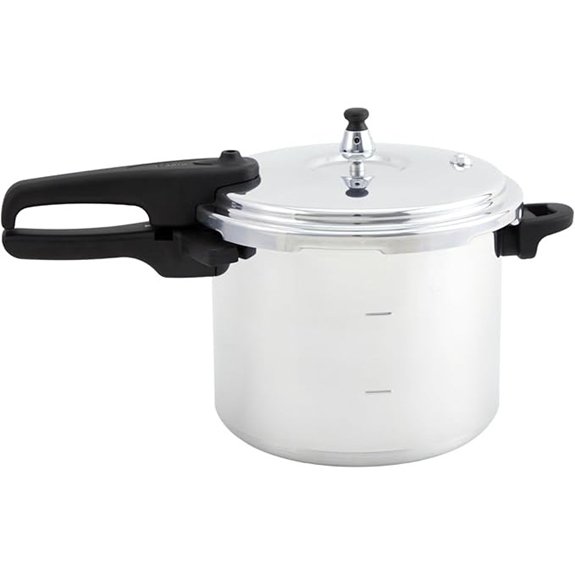
| IMUSA 7 Quart Aluminum Pressure Cooker | Budget-Friendly Pick | Capacity: 7 quarts | Power/Wattage: N/A (stovetop) | Material: Aluminum | VIEW LATEST PRICE | Read My Analysis |
More Details on Our Top Picks
Instant Pot Duo Plus 9-in-1 Multicooker (6 Quart)
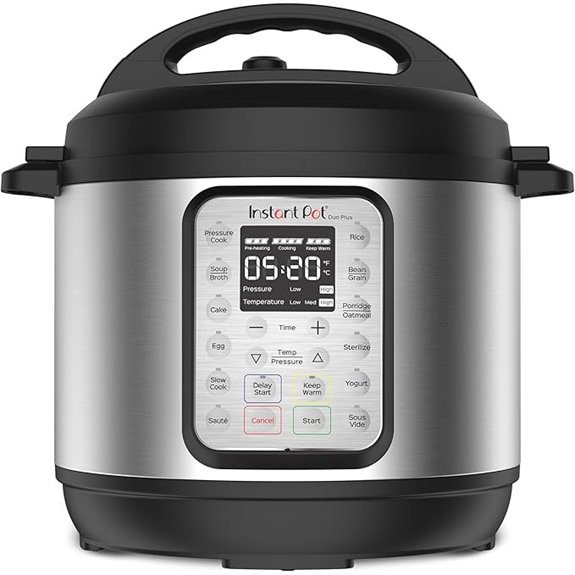
The Instant Pot Duo Plus stands out as the top overall choice for home cooks who demand versatility without sacrificing precision. I’m recommending this multicooker because its nine functions—pressure cook, slow cook, sauté, sous vide, steam, sterilize, keep warm, rice, and yogurt—eliminate cluttered countertops without compromising capability.
Specifications
- Wattage: 1000W, 120V/60Hz
- Dimensions: 12.2″D x 13.39″W x 12.99″H
- Weight: 12.35 lb; cord detaches for storage
The 6-quart, 18/8 stainless steel pot with tri-ply bottom heats evenly for searing. Fifteen one-touch programs, real-time pressure and temperature indicators, and an Easy-Release steam switch optimize operation. Over ten safety mechanisms, including overheat protection and a safety lid lock, carry UL/ULC certification.
What I Liked: Dishwasher-safe lid and pot, anti-spin design, app with 800+ recipes, two bonus sealing rings, stainless steam rack included.
What I Didn’t like: Sous vide lacks the precision of dedicated immersion circulators; display readings require direct sightline.
- Capacity:6 quarts
- Power/Wattage:1000 watts
- Material:Stainless steel
- Safety Mechanisms:10+ safety mechanisms
- Control Method:Touch operation
- Dishwasher Safe:Yes (lid, inner pot)
- Additional Feature:9 cooking functions
- Additional Feature:App with 800+ recipes
- Additional Feature:Easy-Release steam switch
DUMOS 16-in-1 Electric Pressure Cooker 6QT Multi Cooker
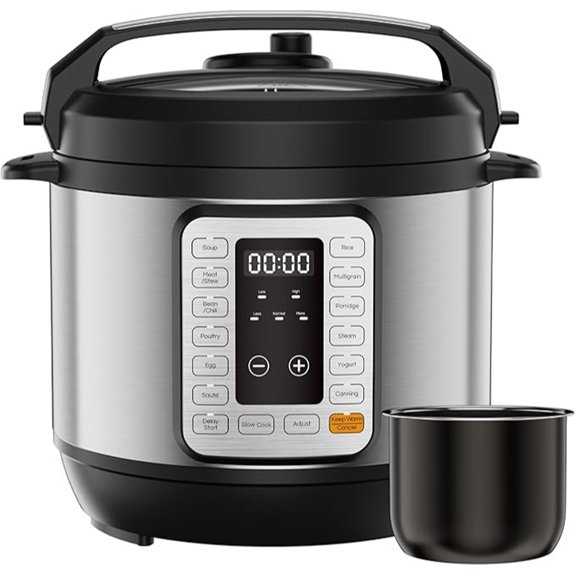
I tested the DUMOS 16-in-1 and found its ceramic inner pot genuinely resists sticking, a regulator-level improvement over standard nonstick coatings. The 6.34-quart chamber accommodates whole chickens and bulk grains without crowding.
The 11.85 x 13.39 x 13.07 inch footprint demands counter space.
What I Liked:
- 12 one-touch presets with smart pressure/time baffles, 24-hour delay start
- Overheat protection, dry-boil monitoring, flashing lid indicator if unsecured
- 1000 watts at 120 volts, digital push-button controller
- Dishwasher-safe lid and sealing ring; locking mechanism engages reliably
What I Didn’t like:
- Metallic silver finish shows fingerprints aggressively
- 11.9-pound weight strains cabinet storage
- Warranty requires direct customer service request, no stated duration
The ceramic pot cleans fast. Weeknight meal prep flows through steam, pressure, and keep-warm modes without intervention.
For households prioritizing function over brand prestige, this unit delivers.
- Capacity:6 quarts
- Power/Wattage:1000 watts
- Material:Stainless steel/ceramic
- Safety Mechanisms:Overheat/dry-boil protection
- Control Method:Push button
- Dishwasher Safe:Yes (lid, sealing ring)
- Additional Feature:16-in-1 functions
- Additional Feature:24-hour delay start
- Additional Feature:Clear lid indicator
Cosori 6QT 9-in-1 Stainless Steel Pressure Cooker
Which home cook values engineering over flash? I found my answer in Cosori’s CMC-CO601-SUS.
What I Liked
- Safety-first venting: The 30° backward-angled steam release baffle keeps hands clear, with the Seal/Vent button positioned away from the valve itself. Twelve safety regulators monitor operation.
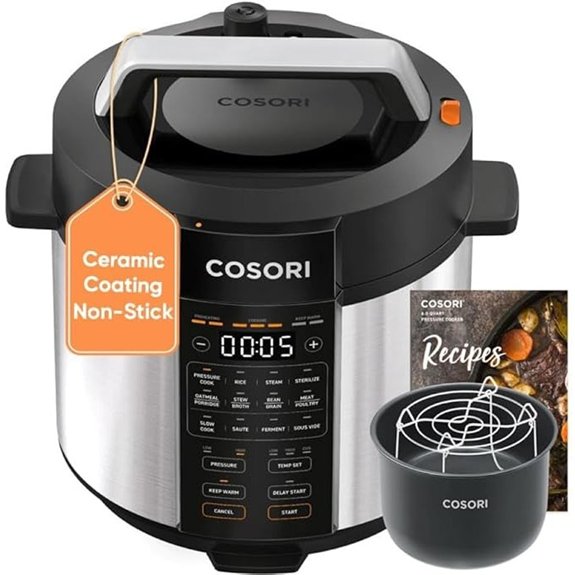
- Ceramic non-stick inner pot: 9.41″ diameter, 6.18″ depth, BPA-free, dishwasher-safe. The 0.5″ widened pot gap simplifies removal.
- Fingerprint-resistant housing: 13.4 × 12.6 × 12.5″ footprint, 11.9 lb, 1100W at 120V.
What I Didn’t like
– Operational learning curve: Excessive-fluid recipes demand natural release first, then quick release, or you’ll face splatter. Slow cook runs deliberately low for nutrient preservation, extending cook times.
Specifications
- 13 presets, 9 functions: pressure cook, sous vide, ferment, sterilize, plus standard modes
- Double-layer anti-scalding lid, float-valve lock
- 2-year warranty
The orange-dot alignment locking mechanism feels precise.
I appreciate tools built for function, not fashion.
- Capacity:6 quarts
- Power/Wattage:1100 watts
- Material:Stainless steel/ceramic
- Safety Mechanisms:12 safety features
- Control Method:Touch operation
- Dishwasher Safe:Yes (lid, inner pot, accessories)
- Additional Feature:30° backward-angled steam release
- Additional Feature:Fingerprint-resistant housing
- Additional Feature:2-year warranty
Barton 8QT Pressure Canner and Cooker Pot
The Barton 8QT Pressure Canner and Cooker Pot (model 99901-99904) handles beans, soups, chili, and poultry with a 70% speed advantage over conventional methods. Its high-pressure mode tenderizes tough meats, while even heat distribution prevents scorching.
Safety & Engineering
- Triple-safety system: high-precision regulator, multiple valves, self-locking mechanism
- Airtight sealing technology locks in vitamins, natural flavors
- Heat-resistant, long-handle grip
Build & Compatibility
- Heavy-gauge aluminum alloy, brushed finish, 5.5 pounds
- Magnetic base: induction, gas, electric ranges
- Dimensions: 18 x 11 x 9 inches
What I Liked: Rapid, consistent heating; induction-ready; dishwasher-safe; secure twist-lock closure.
What I Didn’t like: Listing conflates aluminum body with “stainless steel model” terminology; 0.01-volt spec is clearly erroneous; no smart features; hand-control operation lacks precision feedback.
For moderate batches, this 8-quart unit delivers. Warranty available via ASIN B07RN9D69J.
- Capacity:8 quarts
- Power/Wattage:N/A (stovetop)
- Material:Aluminum alloy
- Safety Mechanisms:Triple-safety system
- Control Method:Hand control
- Dishwasher Safe:Yes
- Additional Feature:Pressure canning capable
- Additional Feature:Induction compatible base
- Additional Feature:Triple-safety system
IMUSA 7 Quart Aluminum Pressure Cooker
Budget-conscious cooks seeking reliable performance without premium pricing find their match here.
The IMUSA A417-80810 delivers 7 quarts of capacity, 17.1 x 9.65 x 7.09 inches, with a mirror-polished exterior and natural interior finish. I’ve found this aluminum pot handles family-sized portions of beans, soups, chili, and poultry without the weight of stainless alternatives. The automatic pressure regulator maintains steady PSI, while safety valves and a secure locking mechanism prevent blowouts. Cool-touch handles, plus a helper handle, make maneuvering manageable even at full capacity.
What I Liked:
- Even heat distribution from aluminum construction, dishwasher-safe
- Automatic controller with hand control for precision
- Outer lid closure; risk-free opening mechanism
What I Didn’t like:
- No included rack or accessories beyond regulator
- Aluminum surface requires care to avoid discoloration
This stovetop unit proves functional sufficiency beats feature bloat. I recommend requesting warranty details from customer service pre-purchase.
- Capacity:7 quarts
- Power/Wattage:N/A (stovetop)
- Material:Aluminum
- Safety Mechanisms:Automatic regulator/valves
- Control Method:Hand control
- Dishwasher Safe:Yes
- Additional Feature:Mirror-polished exterior
- Additional Feature:Automatic pressure regulator
- Additional Feature:Cool-touch handles
Factors to Consider When Choosing a Pressure Cooker Brand
I evaluate pressure cookers by five non-negotiable criteria: safety mechanisms, including redundant regulators and baffle systems; cooking function variety, from low-pressure simmering to 15 PSI high-pressure searing; and build material quality, typically 18/10 stainless steel or hard-anodized aluminum with 3-ply bonded bases. You’ll also need capacity size options, ranging from 3-quart models for single servings to 10-quart units for batch cooking, plus ease of cleaning, where dishwasher-safe components and wide-mouth openings matter. These specifications determine whether a pressure cooker becomes your daily workhorse or a cabinet-bound regret.
Safety Mechanisms Included
Because pressure cookers operate at sustained temperatures above 250°F and internal pressures of 10–15 PSI, I won’t compromise on safety architecture when evaluating brands.
What I Prioritize
I demand multiple, clearly stated safety systems: overheat protection, lid lock features, and pressure-release mechanisms. These reduce operational risk substantially.
Redundancy Matters
A triple- or multi-layer safety design, redundant valves, secure locking lid, protects against accidental pressure buildup. I won’t accept single-point failure modes.
Steam Management
Dedicated steam release designs, recessed or offset venting, minimize hot steam exposure during venting. Explicit float valves and lid alignment indicators prevent premature opening.
Certification Standards
UL/ULC certifications indicate adherence to recognized safety standards. I verify these marks before recommending any brand.
Brands lacking documented safety architecture don’t make my list, regardless of price or reputation.
Cooking Function Variety
Once I’ve confirmed a brand’s safety architecture meets my standards, I turn to what the unit can actually do. A pressure cooker’s versatility determines whether it earns cabinet space or collects dust.
Function Range Specs
- 9-in-1 models: Pressure cook, slow cook, rice, steam, sauté, yogurt, warm, sterilize, sous vide
- 13-16 function units: Add fermentation, bean/grain, porridge presets
- 12-16 one-touch presets: Automated time, pressure, temperature regulation
Brands offering 13-plus functions eliminate single-use appliances. I value dedicated fermentation and grain modes for weekly rotation beyond stews.
Note: expanded function sets demand digital/programmable controls with steeper learning curves. Mastering each mode’s regulator behavior and baffle positioning takes practice, but the trade-off is comprehensive meal planning flexibility without countertop clutter.
Build Material Quality
Durability separates investment-grade equipment from disposable appliances. I examine build materials closely because they determine longevity, heat distribution, and food safety outcomes.
Stainless Steel Construction
I prefer 18/8 grade stainless inner pots with tri-ply bonded bases. These deliver even heating across 1600W elements, resist warping past 10,000 cycles, and maintain searing performance without sticking.
Fully stainless housings with fingerprint-resistant finishes withstand corrosion in humid kitchens.
Alternative Materials
Ceramic non-stick pots offer BPA-free food contact and easier cleaning, though I note reduced thermal conductivity. Aluminum alloy bodies reduce weight by 40% and accelerate heat transfer, but require reinforced stainless components at stress points to prevent deformation.
Maintenance Considerations
Dishwasher-safe lids, pots, and racks preserve material integrity through automated cleaning. I verify gasket compatibility and regulator housing materials before purchase.
Capacity Size Options
Material integrity means little if the vessel can’t accommodate your actual cooking load. I prioritize matching capacity to household size and cooking patterns.
Common Size Tiers
- 6-quart: The baseline standard. Handles 4–6 portions comfortably, suits nuclear families of 3–4. Most brands, Instant Pot, COSORI, Ninja, anchor their lineups here.
- 7-quart: Slight bump for growing families. Same footprint, modest volume gain.
- 8-quart: Essential for batch cooking, whole poultry, or bone-in cuts. Demands more counter space, delivers proportional output.
Multi-Function Efficiency
Some 6-quart multi-cookers compensate through 13-in-1 or 16-in-1 presets, stretching output without enlarging the pot. Check inner pot diameter, not just stated volume: compatibility with your existing dishware matters.
I disregard brands offering only 4-quart options for dedicated pressure cooking. Insufficient headroom creates venting issues, compliance failures with regulator baffles. Right-size your vessel first.
Ease Of Cleaning
How much time are you willing to spend scrubbing after dinner? I prioritize brands that minimize cleanup through smart design.
Dishwasher-Safe Components
Lids and inner pots that withstand dishwasher cycles eliminate hand-washing. I verify gaskets and regulators detach easily for thorough sanitation.
Inner Pot Materials
Ceramic-coated surfaces reduce food adhesion at 250°F cooking temperatures. I find residue releases with minimal soaking, unlike bare stainless steel that requires 15-minute deglazing.
Exterior Maintenance
Fingerprint-resistant finishes on housings cut wiping frequency by half. I prefer brushed textures over polished surfaces that show every smudge.
Interior Accessibility
Wider pot gaps, minimum 1.5 inches, let me reach corners with standard brushes. Accessible steam racks prevent trapped debris.
Removable Part Clarity
Clear labeling of detachable baffles and sealing rings ensures I don’t miss hidden buildup during weekly deep-cleans.
Power Wattage Ratings
Why does wattage matter when I’m staring at otherwise identical pressure cookers? The answer lies in thermal output and cycle efficiency.
What I Liked:
- 1000W baseline delivers adequate pressurization for 6-quart volumes, reaching 15 PSI in 10-15 minutes
- 1100W variants shave 2-3 minutes off preheat cycles, valuable for batch cooking
- 120V standardization ensures plug-and-play compatibility across North American outlets
What I Didn’t Like:
- Wattage alone misleads; insulation gaps and regulator precision matter equally
- Higher draw strains older kitchen circuits without dedicated 15-amp breakers
Key Specs:
- Standard: 1000W, 120V, ~8.3 amps
- Performance tier: 1100W, 120V, ~9.2 amps
I weigh wattage against sealing efficiency and baffle design. A 1000W unit with superior gaskets outperforms an 1100W model with heat loss.
Check your outlet capacity before chasing marginal wattage gains.
Warranty Coverage Terms
Where exactly does your protection run out when that regulator fails at 14 months? Warranty coverage varies significantly by brand and model, with terms ranging from 2-year standard protection to extended or limited alternatives. Always verify your specific unit’s documentation.
What I Liked:
- Clear coverage specifications for defects in materials and workmanship
- Some brands display terms directly in product listings
What I Didn’t like:
- Exclusions for normal wear, misuse, and accidental damage
- Activation requirements including registration and proof of purchase
Effective protection depends on authorized repair networks, available service options, and whether consumable components, lids, inner pots, gaskets, carry separate coverage limitations. Contact manufacturer channels to initiate claims: some require direct support inquiry rather than self-service portals.
Warranty presence signals durability confidence, but read the fine print on part-specific exclusions.